Over the past ten years, solar EPC teams have been on a quest for faster installation, optimal margins, and the shortest possible commercial operation date (COD). However, one hurdle that’s been under the radar throughout:
The gap between engineering design and the delays that impact later stages.
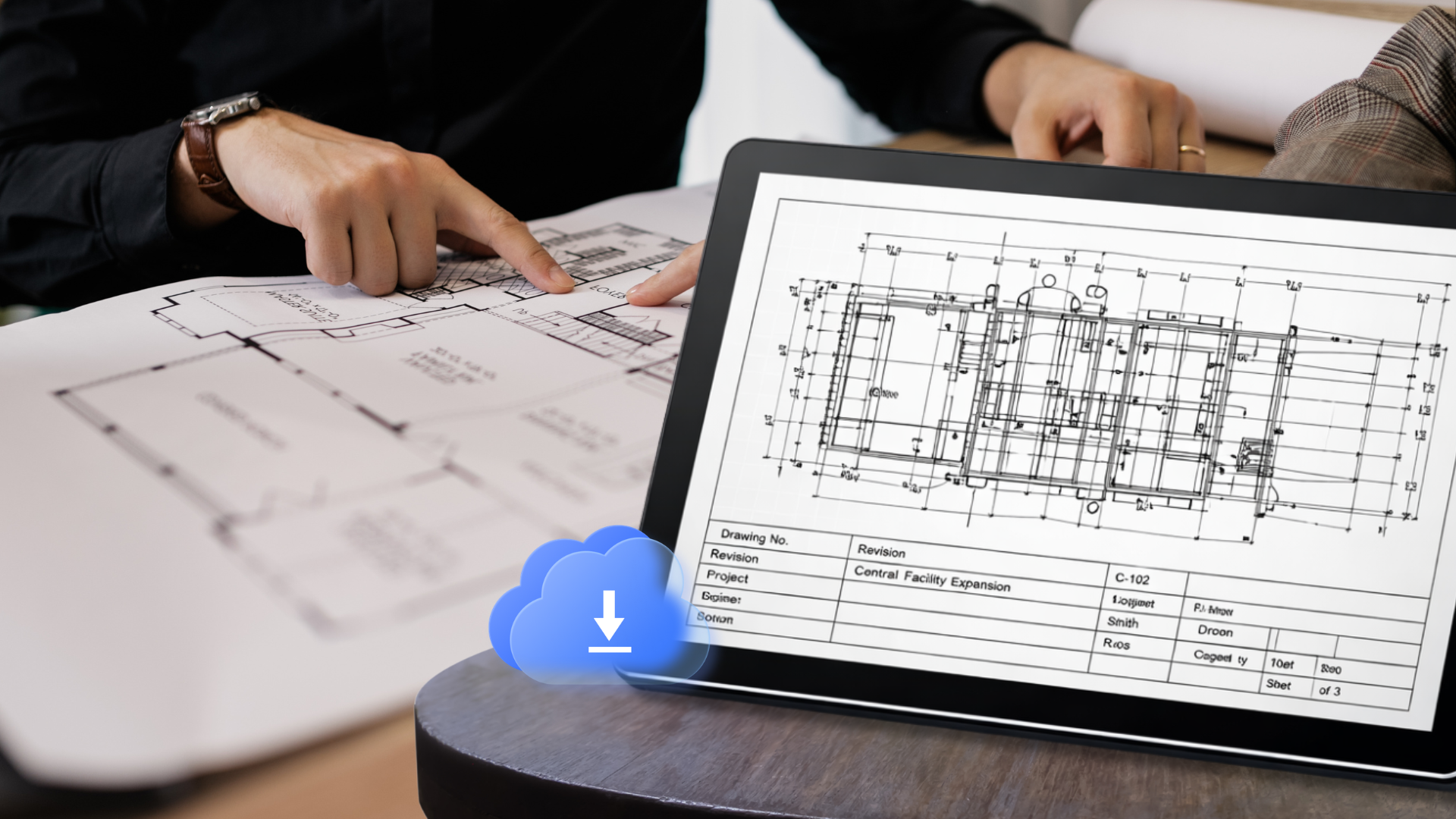
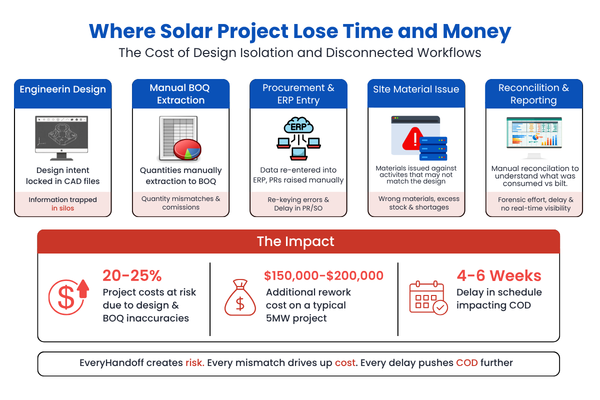
Design plans often stay stuck in CAD files. Procurement teams rely on emails and spreadsheets. Site updates arrive late, if at all. By the time someone notices missing materials or a BOQ mismatch, the schedule and budget have already taken a hit.
This is not a local issue. If design or BOQ preparation is done incorrectly, solar design software vendors report that rework costs are between 20-25% of total project costs (or $150,000-$200,000 on a typical 5MW project), and that 4-6 weeks are lost due to delays. That’s a big deal. On large projects, it can mean the difference between meeting COD and spending months sorting out vendor issues.
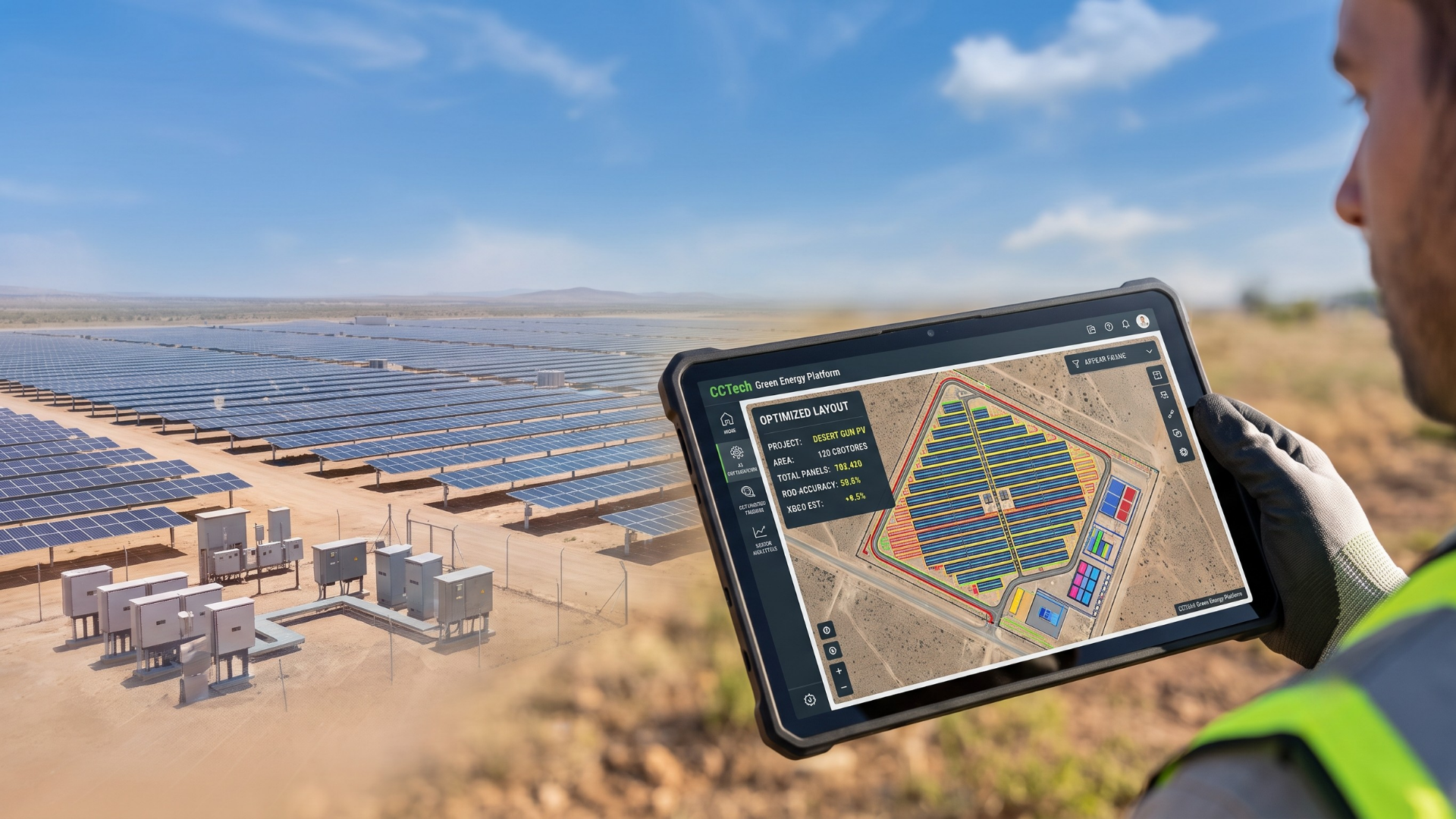
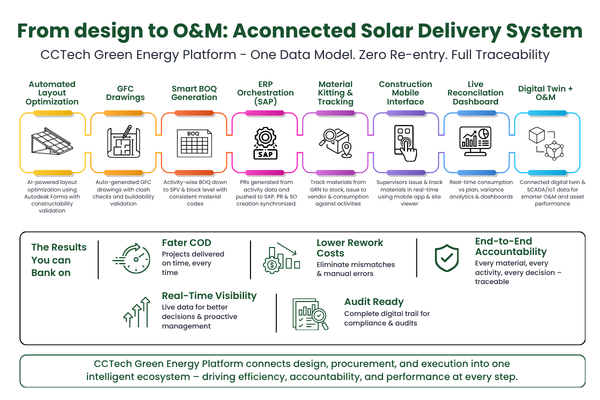
We don’t need another stand-alone design tool to remedy the situation. What we need is a connected, automated workflow that takes design information from layout to site implementation, without requiring human effort. CCTech’s Green Energy Platform was designed to address this need, integrating the entire design, procurement, and site implementation life cycle into a single delivery system for large-scale solar and renewable energy projects.
Consider the typical flow of a large-scale solar project and analyze how the cost of design isolation and disconnected workflows breaks at each stage before material reaches the site.
This is where automated layout optimization earns its place. It acts as the first link in a chain that stays connected throughout the process.
What Automated Layout Optimization Actually Solves
Automated layout optimization is where CCTech’s approach stands out from most point solutions on the market today.
Our Green Energy Platform’s Plug-in Toolkit is custom automation with Autodesk Forma that automatically optimizes layouts and creates GFC drawings. It also validates constructability before the design leaves the engineering phase. That eliminates an entire category of downstream rework, including clash detection and buildability checks that happen at the point where they’re cheapest to fix on screen, and not on site.
But the greater victory is not the optimization itself. It is an optimized design that the smart BOQ Generation module translates into activity-wise BOQs, itemized down to SPV and block level, without manual intervention. Material codes remain consistent from the moment the layout is finalized to the moment procurement acts on them.
Once the BOQ exists as structured data, it flows straight through procurement, site execution, and into long-term O&M, without a single manual re-entry. This is where our platform carries the workflow further than what most tools can.
Where AI Fits into the Picture
The above discussion is true to automation. It follows rules, maps activities, and works in a predictable way. In recent years, AI has been added to BOQ workflows across the industry. AI builds the same system, rather than replacing it.
What AI already does well today
Quantity extraction tools can now read building models and drawings, pick out individual elements, and automatically create structured, BOQ-ready quantities. This is similar to what our BIM-Based Intelligence module already does with 3D models. Some platforms now update these quantities in real time as designs change, so teams can see cost impacts during the design phase instead of waiting until drawings are finished.
Where it’s heading next
Looking ahead, predictive cost modeling is a key development. It uses past project data to estimate likely cost ranges for elements before they are fully designed. Platforms with years of activity-mapped BOQ, procurement, and reconciliation data have a real advantage over generic AI tools added to other workflows. Predictions are only as strong as the historical data behind them, and a connected design-to-O&M platform collects this data by default.
Another promising direction is AI-assisted variance detection during reconciliation. Instead of a supervisor or project manager having to spot unusual consumption patterns by hand, an AI system can flag them as soon as they differ from the activity plan. This could turn dynamic reconciliation from just a live dashboard into an early-warning system for vendor disputes.
In the near future, AI will be added on top to speed up extraction, provide live updates, and offer predictive insights.
The Takeaway
Automated layout optimization is useful by itself. However, it’s what it can achieve later that really makes it valuable. Say for instance, you receive a BOQ that doesn’t need a manual check, a procurement process that just happens to fit with engineering plans, and a site execution phase where material tracking is done at the start of the process rather than at the end.
For solar EPCs working on a larger and more intricate layout, the question isn’t about how fast you can get through the steps to design a layout. Rather, inquire about the limits of design data before the design data must be re-entered by someone. The shorter the distance it must cover, the faster your projects move and the fewer surprises you will face between groundbreaking and COD.