

AI-Powered Design Validation for Manufacturing

Our platform offers enterprise-level risk prevention in engineering by executing automated rule checks, design validation, and design compliance verification powered by manufacturing AI.

Make an Enquiry

Our Offerings

The manufacturing organizations are struggling with increasingly complex products, shorter development cycles, and more stringent regulations. Yet validation of designs and compliance still relies on manual verification, interpretation of documents, and access to a few senior experts without the support of manufacturing AI or automated design validation tools. Design standards have been published in PDF-based documents, spreadsheets, and homegrown systems.This has led to inconsistency across the fields.

The above problems are solved by the CCTech Manufacturing AI Platform through transforming engineering standards and experts controlled execution. It automatically checks CAD models, drawings, assemblies, and BOMs through the current engineering process, ensuring an explainable, repeatable, and defensible compliance scale. This is enterprise-level risk prevention in engineering.

Atlas Copco on Our Manufacturing AI Platform

Atlas Copco, a global leader in industrial innovation, partnered with CCTech to build Samiksha, their AI-powered design validation platform, and the impact has been transformational.

Our Manufacturing AI Platform seamlessly integrates into your existing Autodesk-based workflows — so your engineering teams don’t have to change how they work, just how fast and smart they work.

If you’re looking to reduce design validation cycles, eliminate manual bottlenecks, and bring AI into your engineering workflows, our Manufacturing AI Platform is built for you.

Let’s show you what it can do.


Process Overview

Engineering-logic-driven Automation Architecture

Automation rules are created directly within engineering constraints, parametric relationships, dependencies, and decision trees. The outcomes are determinative, correct, and construction ready.
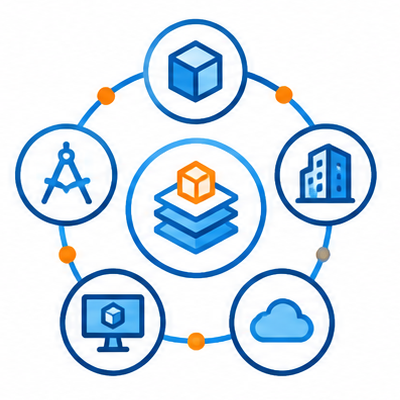
Native Integration with CAD & BIM Platforms

Use of platform APIs and scripting frameworks within AutoCAD, Revit, Tekla, Plant 3D, Civil 3D, and other products to automate current templates/families/standards and user workflows through CAD automation and BIM applications.
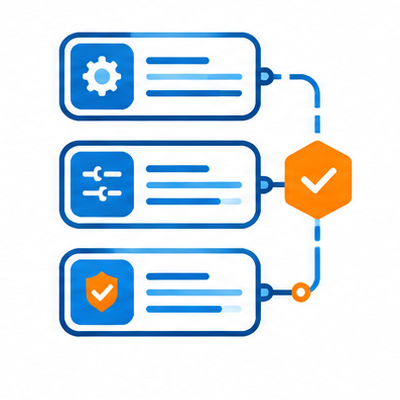
Configurable Rule Sets

The design rules, parameters, and validation logic are externalized and versioned, without the need to modify any automation code.
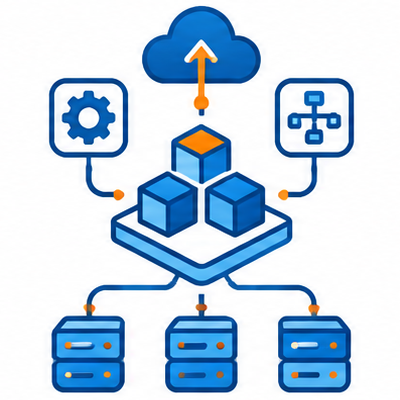
Scalable Automation Frameworks

The automation aspects are designed as reusable components to encourage deployment in a single workflow and transition across enterprise-wide automation initiatives.

Measurable Design Throughput and Quality

The automation eliminates manual modeling and drawing tasks through CAD automation and design automation. This reduces human errors and produces predictable results within a measurable cycle of time.

Platform core capabilities

  • Standards Ingestion: Transform ASME, ISO, DIN, ANSI, API, and internal standards into executable, machine-enforceable rules.
  • AI-Assisted Knowledge Extraction: Parse PDFs, Word, Excel, and SharePoint repositories to extract rules with clause-level traceability.
  • No-Code / Low-Code Rule Authoring: Enable domain experts to define design validation logic without software development dependency.
  • Governed Rule Repository: Centralize rules in a version-controlled repository that serves as a single source of truth.
  • Deterministic Rule Execution: Ensure reliable and explainable logic-based validation of geometry, drawings, assemblies, and BOMs using manufacturing AI.
  • Agentic AI Coordination: Coordinate multiple AI agents to validate a variety of design factors simultaneously.
  • Validation Control: Provide controlled AI assistance to reduce the risk of false positives.
  • Design-Time Enforcement: Validate designs while they are being developed rather than waiting until after formal review.
  • Native CAD Integration: Embed validation directly into tools already used by engineering teams, including Autodesk Inventor, AutoCAD, SolidWorks, NX, Solid Edge, and Creo.
  • Real-Time Feedback: Identify rule violations with contextual explanations to support faster design validation and compliance decisions.
  • Zero Workflow Disruption: Eliminate unnecessary export/import cycles and parallel validation systems.
  • Explicit Domain Modeling: Maintain clear separation and governance of mechanical, electrical, and manufacturing rules.
  • Rule Applicability: Control rule execution based on technical applicability and domain-specific requirements.
  • Shared Rule Governance: Safely manage overlapping rules across multiple engineering domains.
  • Cross-Domain Risk Prevention: Detect integration conflicts earlier using manufacturing AI capabilities.