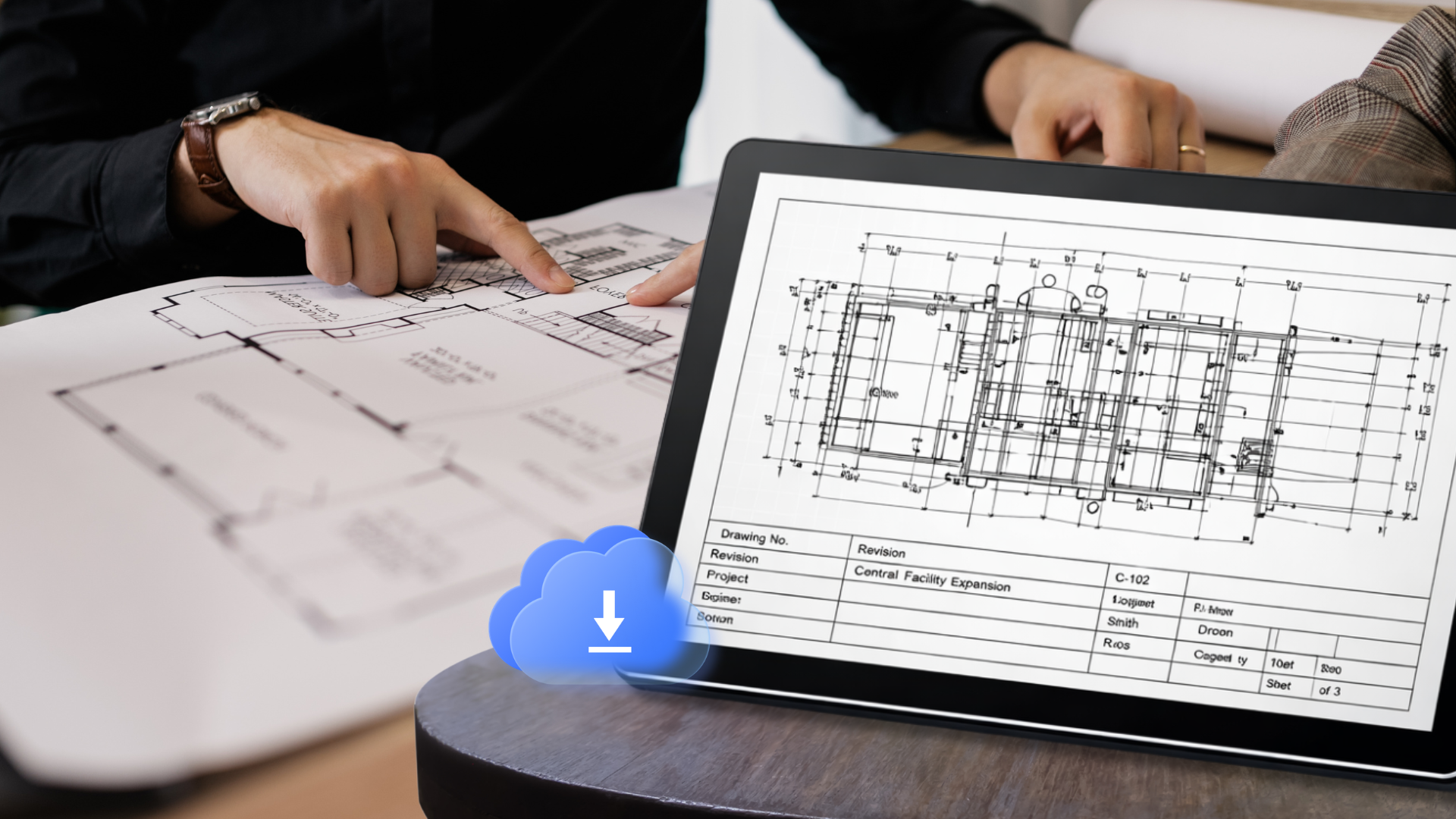
The Old Way Isn’t Scaling Anymore
Modern manufacturing businesses are facing a difficult situation: products are becoming increasingly complex, product development cycles are becoming shorter, and compliance is becoming even harder to achieve.
But design verification is done using the same methodology that is based on reviewing manual drawings, performing expert evaluations, and checking the documents written in PDFs or lengthy Excel tables. A few experienced engineers know the true meaning of these standards by heart, while others simply hope for the best.
What’s Actually Changing with AI
But it’s more than just making things faster – it’s reinventing the entire approach to design validation.
This is what leading-edge manufacturers are doing differently:
Transforming standards into executable rules. Rather than relying on engineers to go back and forth through ASME, ISO, DIN, ANSI, and internal specs, today’s platforms can take all of these documents as inputs and turn them into rule-based validation criteria at the clause level. No more referencing the document stored somewhere else – the standard itself gets embedded in the process.
Validation in the CAD software itself. Another game changer here. Engineers don’t need to export models and validate them separately in yet another tool. Today’s platforms support seamless integration into such industry-standard CAD software as Autodesk Inventor, AutoCAD, SolidWorks, NX, Solid Edge, and Creo.
Defining rules without programming expertise. A major hurdle when it comes to automation is the programming requirement. When you depend on a programmer to code each of your rules, the game is over before it even starts. The good thing about current platforms is that they provide no-code/low-code solutions for defining rules, thus putting control into the hands of domain experts.
Automatically creating audit logs. Compliance means more than meeting the requirements; it means proving that you’ve met them. Current AI solutions create human-readable audit logs and validation reports to ensure compliance and certification.Shape
A Real-World Signal: What Atlas Copco Did
Atlas Copco, a global leader in industrial innovation, faced exactly these challenges. They partnered with CCTech to build Samiksha — their AI-powered design validation platform.
The result? A transformation in how their engineering teams work. Design validation cycles shortened. Manual bottlenecks were eliminated. And institutional knowledge that previously lived in the heads of a few senior engineers became a governed, repeatable system that the entire organization could rely on.
That’s the shift. From expert-dependent to system-dependent. From reactive to proactive.
Why This Matters for Your Engineering Teams Right Now
Consider the ramifications of one such last-minute design change. Man-hours. Release delays. The customer effect. Now, imagine those same ramifications across an entire product line.
ROI of using AI to validate your designs is concrete. This translates into fewer iterations and shorter release cycles, with the level of engineering confidence that allows teams to be agile without constantly questioning their decisions.
At CCTech, we offer a manufacturing AI platform made explicitly to address this issue. We leverage your current Autodesk-based engineering processes to make your teams more productive without having to alter their workflow. Our rules are crafted by your subject-matter experts and run automatically with fully traceable and defensible results.Shape
The Question Worth Asking
And if your team is validating designs the same way it was doing five years ago, it may be worth considering: How much does that really cost?
Both time-wise and risk-wise.
AI-driven design validation is no longer an idea of the future. It’s happening right now — and the companies that adopt it earlier than others are securing themselves an insurmountable engineering edge.
Want to see what this looks like inside your workflows?
Request a demo of CCTech’s Manufacturing AI Platform
and let’s talk about where your biggest validation bottlenecks are.