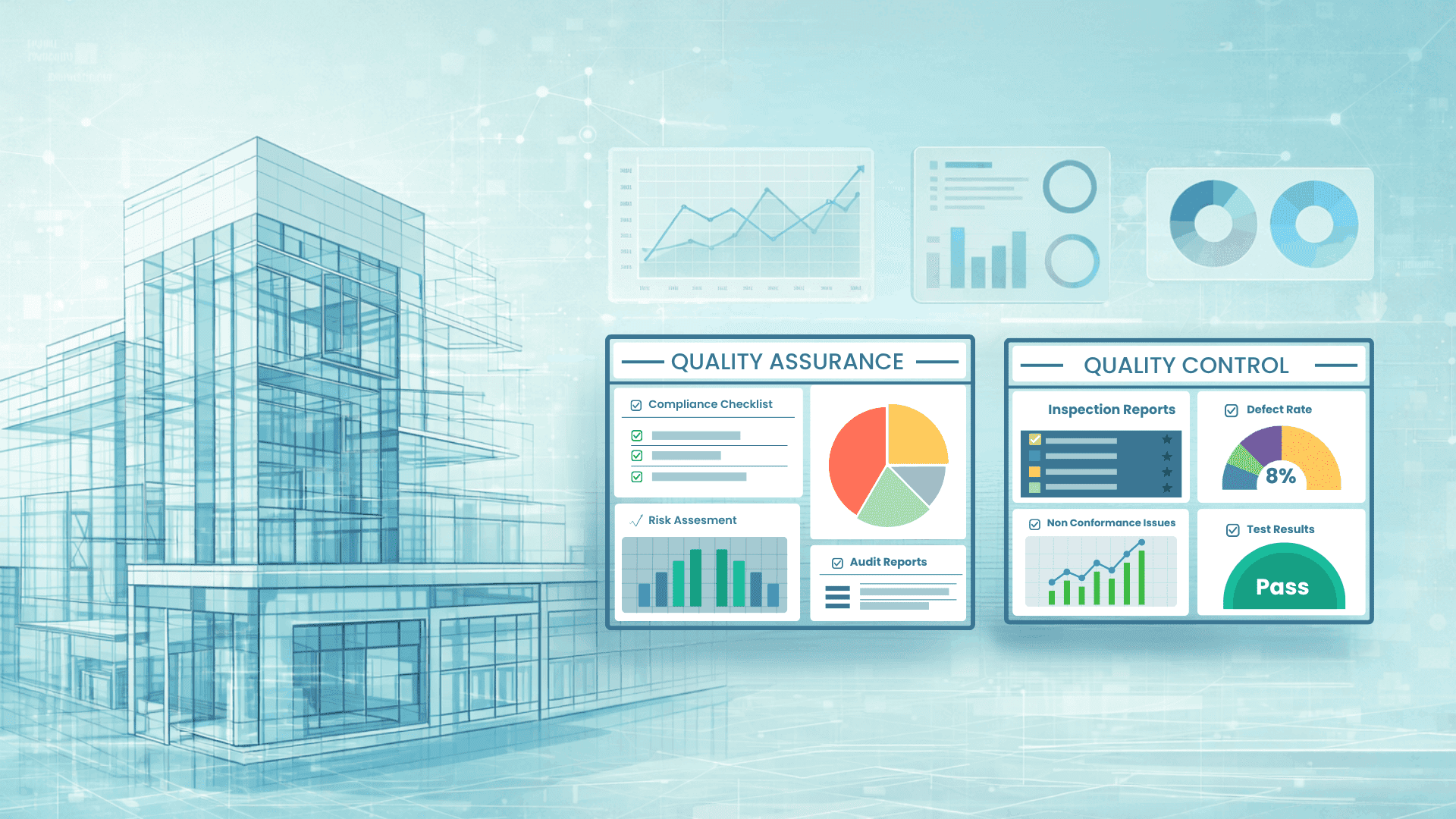
The global construction industry faces a continuous challenge in the design phase. Notwithstanding widespread digitization, quality assurance (QA) and quality control (QC) are handled manually during the model validation. As projects scale and grow more complex, QA and QC become crucial for developing construction documents. These terms are often used interchangeably, thereby increasing the risk of ambiguity.
The economic influence is big. It is worth noting that rework in the construction industry accounts for between 5-10% of overall construction costs and $65 billion annually. The price of repairing errors in the design phase increases with the late identification of the problems. Worse still, the fact that late-stage discovery increases those costs by only a fraction of the costs incurred when such errors are discovered during or after construction. Design errors identified can cost 1-9 percent of the project cost, including design omissions, inaccurate drawings, and late design changes. (Source: Cost of Rework in Construction Project, 2025 )
At the heart of this problem is a structural gap: the absence of automated validation of Building Information Models (BIM). An international survey found that 77 % rely on a common data environment (CDE) to exchange large volumes of data, and two-thirds report BIM as a quicker method for resolving clashes and quality issues. Nonetheless, manual process validation poses a very crucial bottleneck. (Source: Autodesk,2024 )
The Real-Time Challenges
For multidisciplinary teams operating across Architecture, Structure, and MEP disciplines in Autodesk Forma (formerly Autodesk Construction Cloud), the QA model is directly tied to manual inspection. The rule sets for compliance have to be applied manually, issues have to be logged individually, and most importantly, the feedback loops are lengthy. Given the daily demands to maintain procedure quality, site managers, planners, estimators, designers, and engineers ensure that technical requirements always take precedence until a crisis or an issue arises.
The effects are spillover. Research indicates that rework may cost up to 20% of the project cost to the contractor. These are not exceptions but systemic indicators of reactive quality management.
CCTech’s Way to Innovation: Autodesk Forma QA Co-Pilot
During an internal hackathon, CCTech’s employees- Aditya Jadhav, Anup Batki, and Abhishek Gavkare channeled these real-world pain points into a working prototype. The result is Forma QA Co-Pilot, an AI-driven assistant embedded directly within ACC workflows that automates model quality checks and removes the friction of manual issue logging.
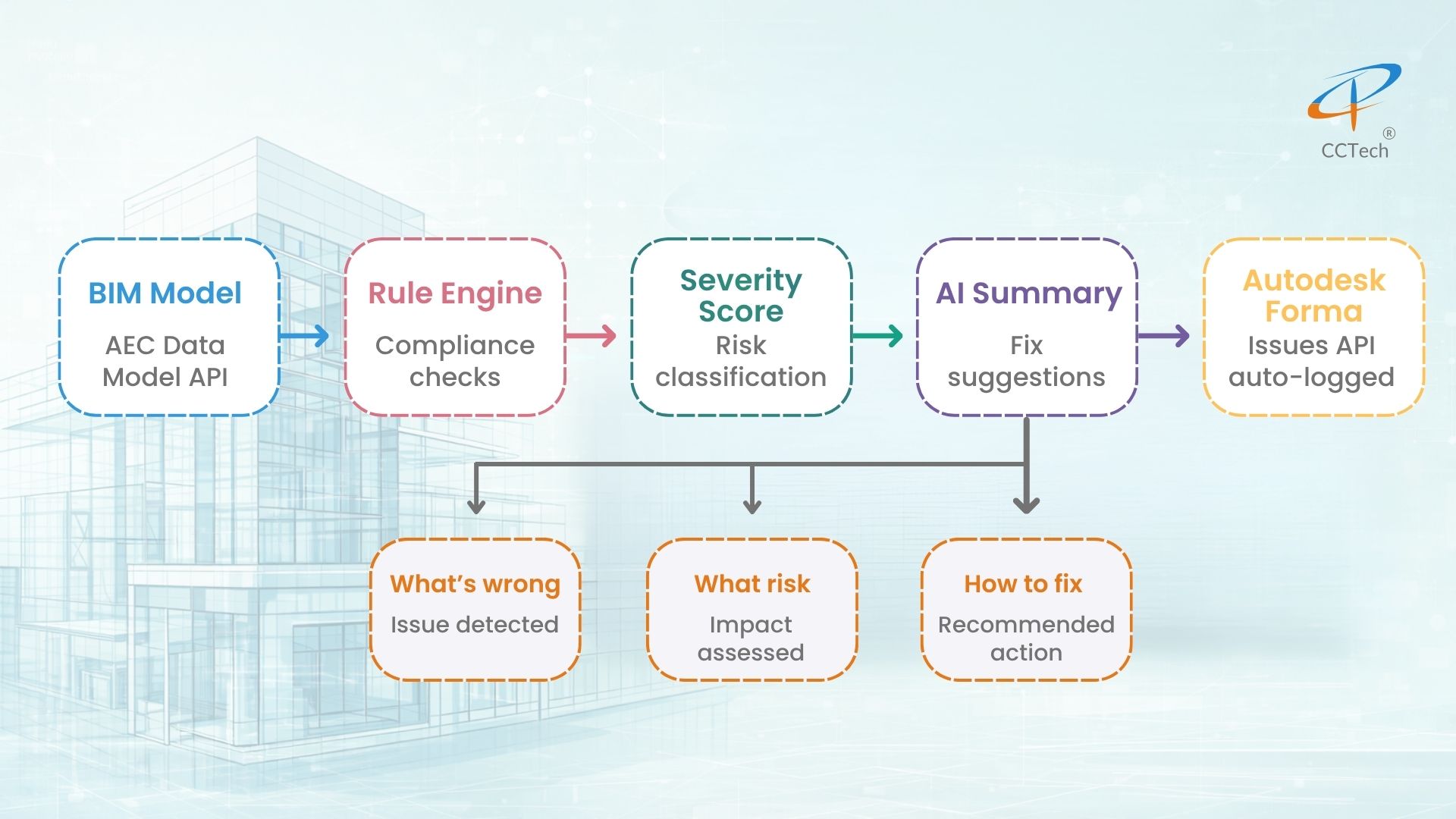
Importantly, the tool uses Autodesk Platform Services (APS) OAuth to authenticate users securely, enabling enterprise-level integration without interfering with current workflows.
Architecture for Impact
Our QA Co-Pilot is an architecturally native Autodesk Forma product, unlike standalone QA checkers. It is important since platform fragmentation is the most frequent malfunction in construction technology. Teams are forced to switch between the tools, analyze the context, and avoid delays. The solution completely removes switching costs by integrating the workflow and automatically creating issues in the Forma issues tracker. The fact that the team has decided to develop a dynamic rule engine rather than hardcode static checks is also important.
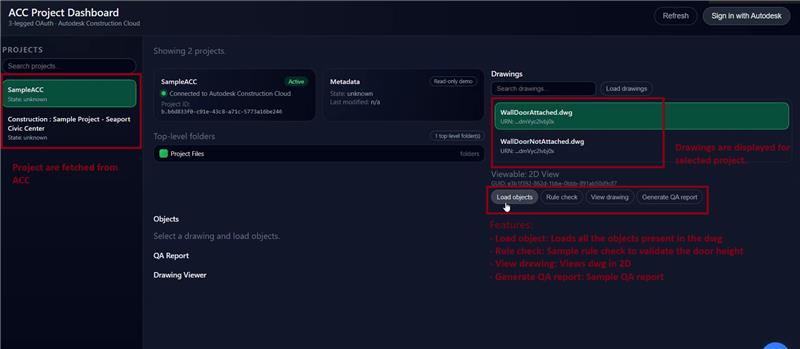
A scalable rule layer demonstrates that compliance libraries can meet project requirements. They are an enterprise requirement for multi-disciplinary projects. It is expected to achieve a substantial efficiency improvement, with the number of hours spent on manual QA could be decreased by as much as 70%.
The Road Ahead: From Reactive to Predictive QA
The strong correspondence between the solution and industry’s actual pain points prompted the team to extend the rules to additional areas and incorporate predictive analytics. Although the literature on digital technologies and quality assurance is expanding, the adoption of related digital technologies in building quality assurance has not been comprehensively assessed and integrated, leaving much to be desired in the field of innovation at the crossroads of AI and compliance verification. The next generation of Autodesk Forma QA Co-Pilot might include machine learning trained on historical issue data to identify potential risks before they occur. Together with the new features of Autodesk Forma, the platform environment is rapidly becoming an AI-native QA tool.
Conclusion
This Autodesk Forma QA Co-Pilot by the CCTech team is not just proof-of-concept at the hackathon. It is a roadmap on how construction technology practitioners can bridge the long-standing gap between model creation and model validation. The solution represents the desired transformation the industry is desperately awaiting: Reduced costs, responsive quality management, intelligent quality assurance, where problems are detected in time, decisions are made based on facts, and manual QA hours are reduced to 70%.