With businesses on the fast track to digital transformation, you likely hear the terms “Digital Factory” and “Smart Factory” tossed around frequently, often in an interchangeable manner. However, from a business and financial standpoint, these two ideas deliver value at completely opposite ends of the enterprise value chain.
Differentiating between a digital factory and a smart factory matters to business leaders who are looking to drive capital efficiency, operational margins, risk management and long-term ROI improvements.
This blog talks about what they are and how each complements the other, delivering business benefits throughout an organization.
What Is a Digital Factory?
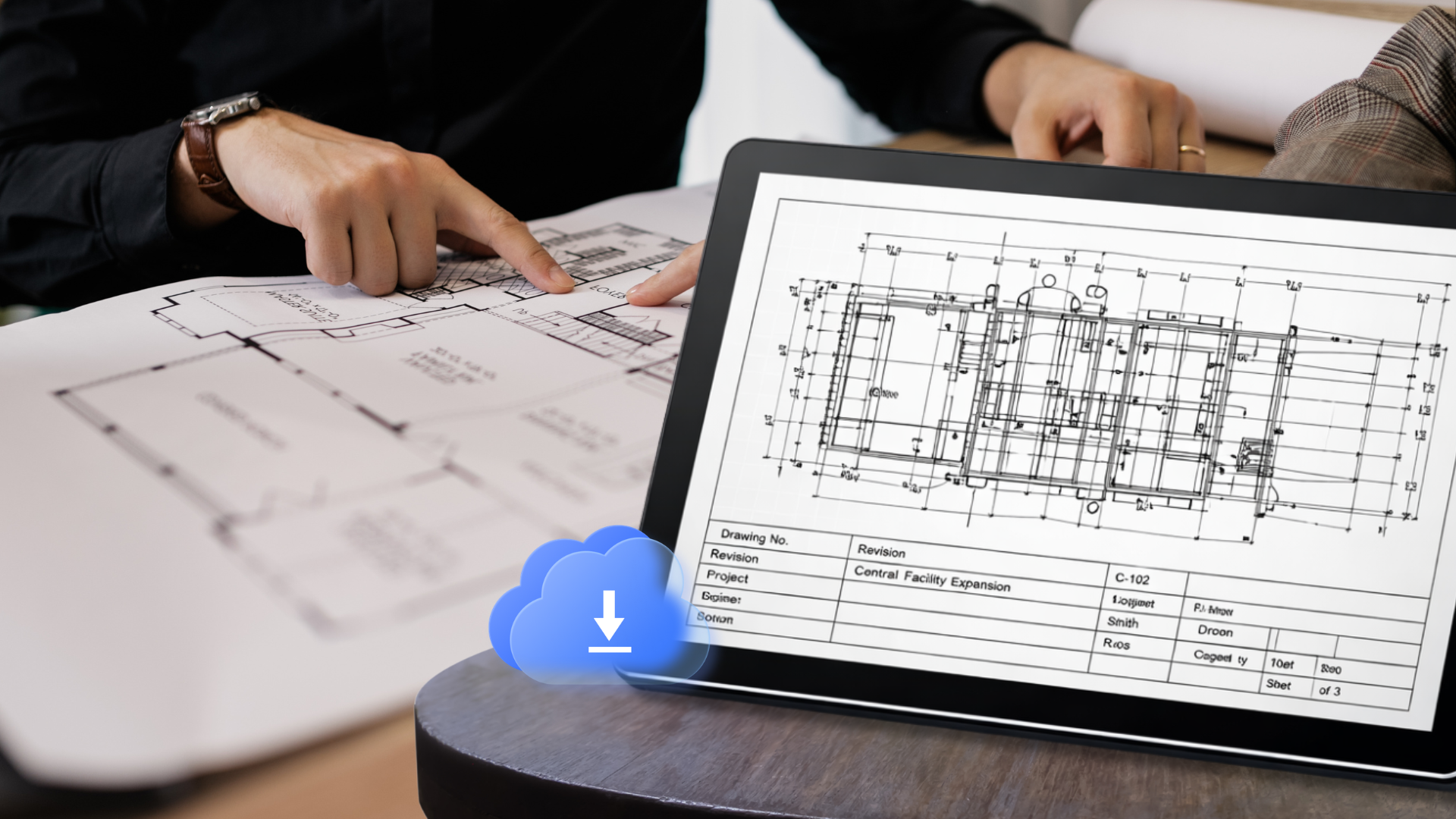
The Digital Factory is primarily a strategic decision-support framework. It allows enterprises to digitally design, simulate and validate systems, processes, and workflows for execution in a stable manner.
From a business standpoint, the digital factory exists to reduce uncertainty before committing capital.
Why You Should Choose Digital Factory?
- Reduced risk of investment through scenario simulations
- Reduced rework and change costs
- Improved capital allocation decisions
- Faster time-to-market
- Higher predictability of outcomes
Executives can evaluate multiple “what-if” options — what it would take in terms of time, cost and resources, before they spend money or make any decisions.
Financial Impact
The digital factory primarily delivers cost avoidance:
- Prevents expensive redesigns
- Minimizes project overruns
- Reduces delays caused by poor upfront planning
What Is a Smart Factory?
Commercial Benefits:
- Lower operating costs
- Higher productivity and asset utilization
- Reduced downtime and service disruptions
- Improved quality and customer satisfaction
- Scalable, data-driven operations
- Smart factories transform operational data into quantifiable financial results.
Financial Impact:
The intelligent factory monetizes with direct and recurring financial value:
- Operating cost reduction
- Margin improvement
- Revenue protection through reliability
- Improved service-level performance
Comparing Business Impact
| Business Dimension | Digital Factory | Smart Factory |
|---|---|---|
| Primary Focus | Planning & validation | Execution & optimization |
| Value Timing | Before implementation | During operations |
| Financial Benefit | Cost avoidance | Cost reduction & revenue uplift |
| Risk Management | Proactive | Predictive & reactive |
| Decision Level | Strategic & leadership | Operational & tactical |
| ROI Horizon | Medium to long term | Short to medium term |
In simple terms, the digital factory protects capital, while the smart factory improves margins.
Why the Distinction Matters for Business Leaders
There are several companies that spend a lot on smart initiatives without any real-time validation. This often leads to:
- Underutilized systems
- Higher-than-expected operating costs
- Slower ROI realization
On the other hand, organizations that adopt a Digital Factory first:
- Enter execution with greater confidence
- Deploy smart capabilities more effectively
- Achieve faster payback periods
Combined Business Value: A Closed-Loop Advantage
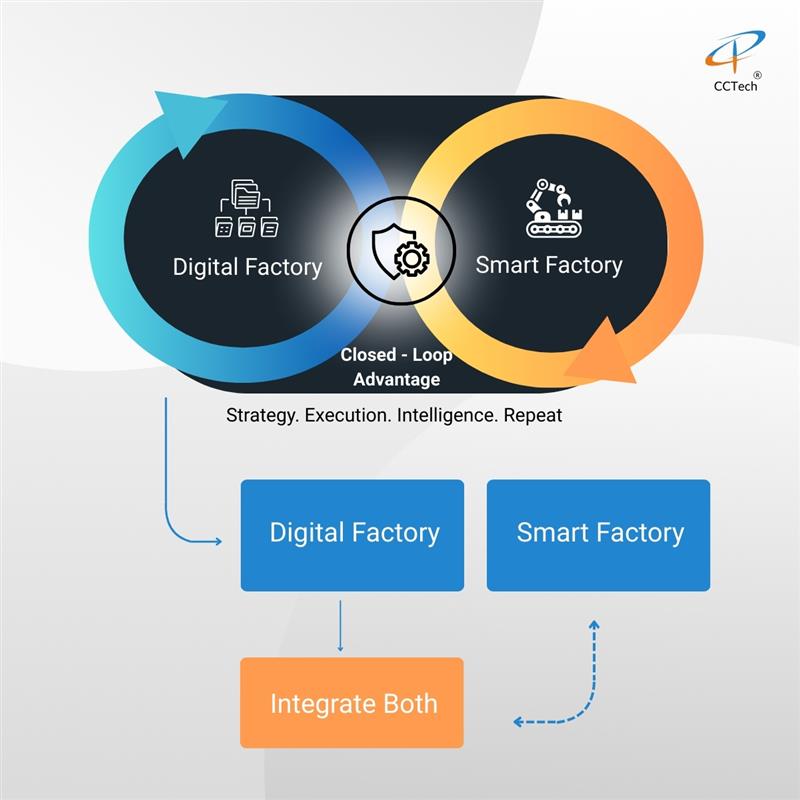
Connected together, the digital factory and smart factory form a closed-loop business model:
- Digital Factory identifies and validates best practices
- Smart Factory Act and optimal operates in real-time
- Operational insights are fed back to digital models
- Decisions in the future will be intelligent and fruitful.
This loop enables:
- Continuous improvement
- Better forecasting accuracy
- Stronger governance
- Sustainable competitive advantage
How Executives Should Prioritize
The optimal place to begin is dependent on business priorities:
- Heavy capital investments or greenfield activities → Build up from a Digital Factory level
- Margin pressure or operational inefficiency → Begin with a Smart Factory
- Reliability, scalability, and resilience objectives → Embody both
The goal is not technological adoption, but a measurable business impact.
Final Takeaway
Better decisions:
- The Digital Factory drives better business outcomes by helping leaders make better decisions
- A Smart Factory simply gets better results for organizations