From layouts to an intelligent, scalable digital factory
Our Digital Factory solutions begin with ‘structured’ factory layouts and mature to connected, simulated, and integrated digital factories. The result is a 3D digital twin that is enhanced by live operational data and advance towards Industry 4.0.
Manufacturing teams often begin by defining the use of space, the production flow, the logistics path, and the feasibility of expansion. The most frequently employed tool is AutoCAD. These early design choices form the basis for construction, performance, and long-term operations.
This structured approach, which began with layout planning and extended through design, simulation, and real-time information, ensures that data continuity is maintained throughout the process.
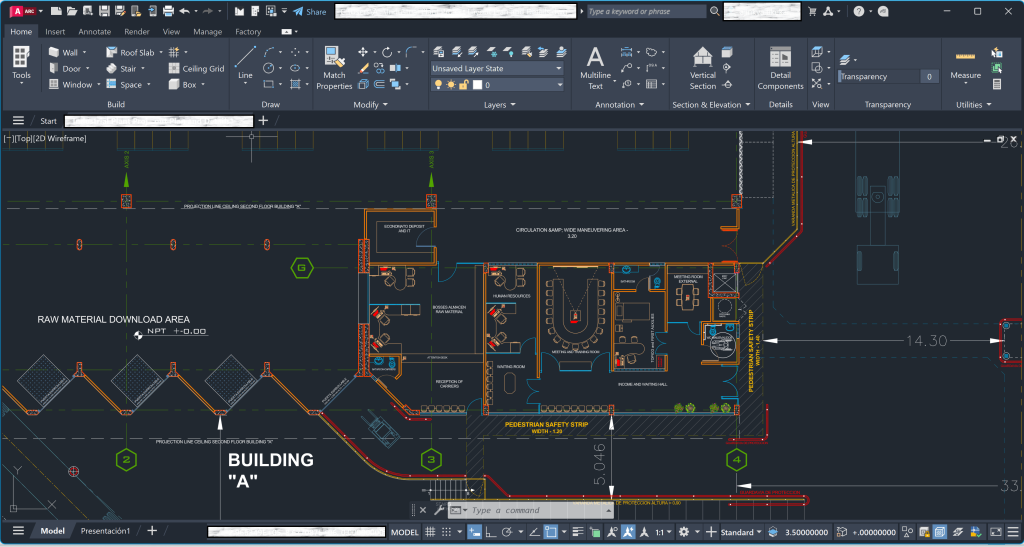
Factory Layout Planning in AutoCAD
The journey begins with layout planning in 2D, understanding space allocation, materials, movement, and roadblocks. It is defined before design work solidifies downstream decisions.
Key Characteristics
High-level spatial planning without equipment details.
Zones, aisles, and circulation paths are defined.
Early identification of spatial constraints
The layout serves as a baseline for all subsequent stages.
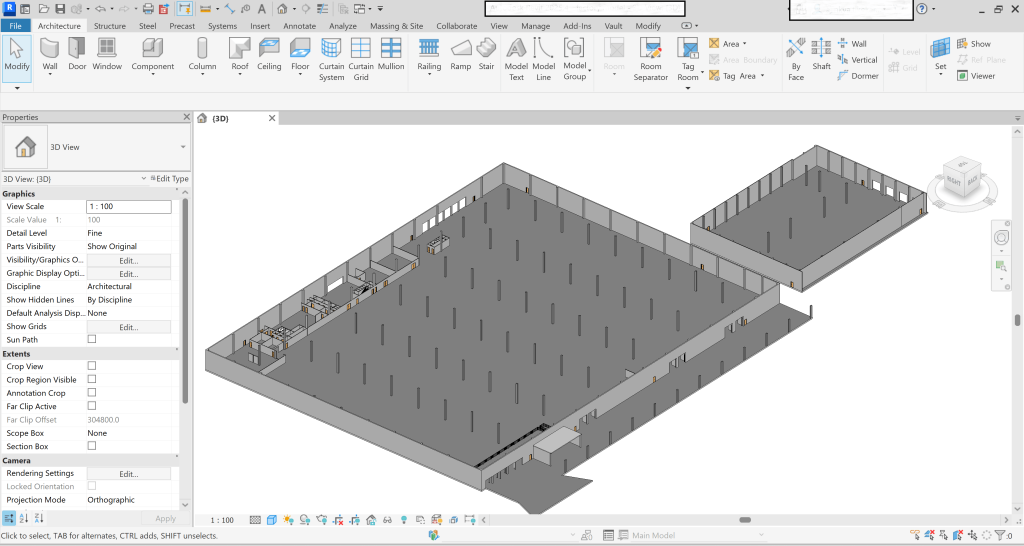
Development of Plant Layout in BIM Model
Factory facility design is sculpted digitally within BIM authoring applications, simulating the complete facility context, including floors, columns, walls, roof, and clearances.
Key Characteristics
Develops a building information model (BIM) for the plant
Coordinated building elements and clearances
Centralized access and controlled collaboration
Single source of truth concerning facility data
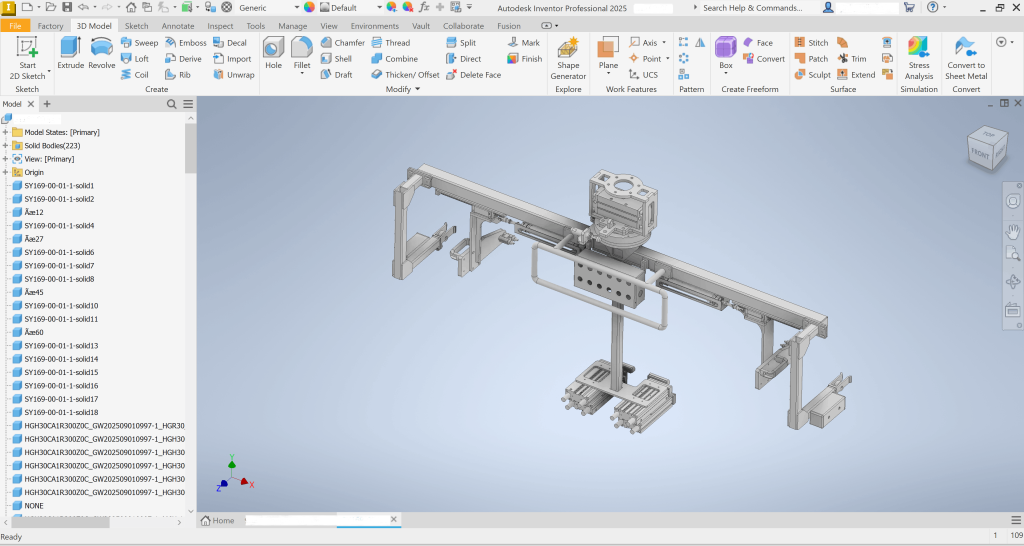
Equipment & Mechanical Design
Designing manufacturing equipment follows once the facility layout has been established. This step involves designing mechanical equipment layouts, adhering to spatial constraints for easy production flow.
Key Characteristics
Model of parametric equipment and assembly.
Construct that fits layout and space.
Reusable and configurable equipment assets.
Layout positioning and simulation preparation.
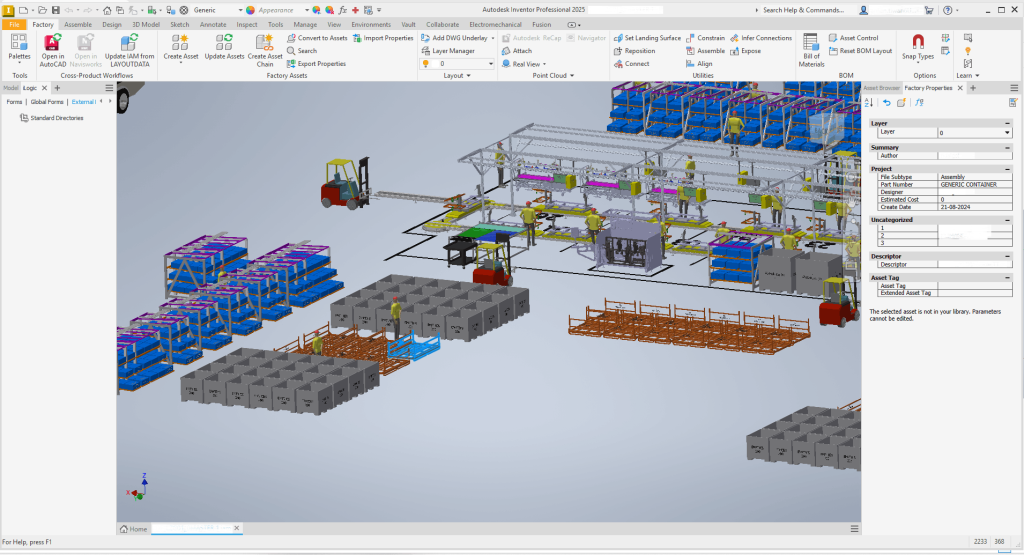
Construction of a Part-Based Plant Layout
This stage involves the development of a complete factory layout with BIM data, equipment models, and process flows. It also helps the team to view, optimize, and control plant configuration.
Key Characteristics
Combined 2D and 3D factory layout
Synchronized building and equipment context
Controlled layouts, iterations, and the governance of data
Centralized management of layout data
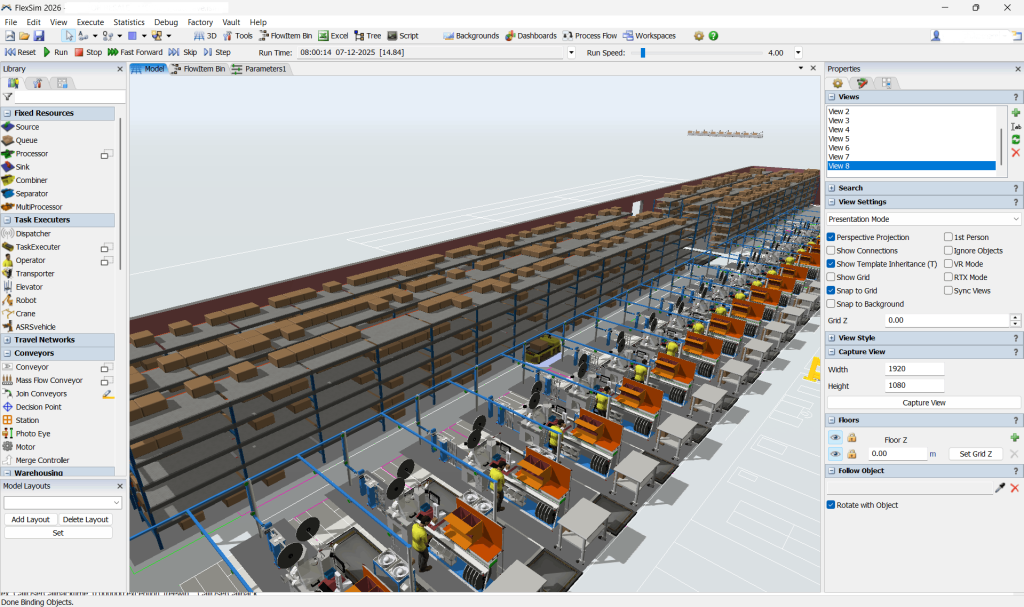
Simulation & Performance Validation
This phase verifies how the factory will function before it is built. Simulation turns design assumptions into measurable results using key indicators like throughput, resource utilization, and material flow.
Key Characteristics
Simulation-driven performance evaluation
What-if scenario analysis
Bottleneck and inefficiency identification
Resource and material flow optimization
Connected Digital Factory & Real-Time Data Integration
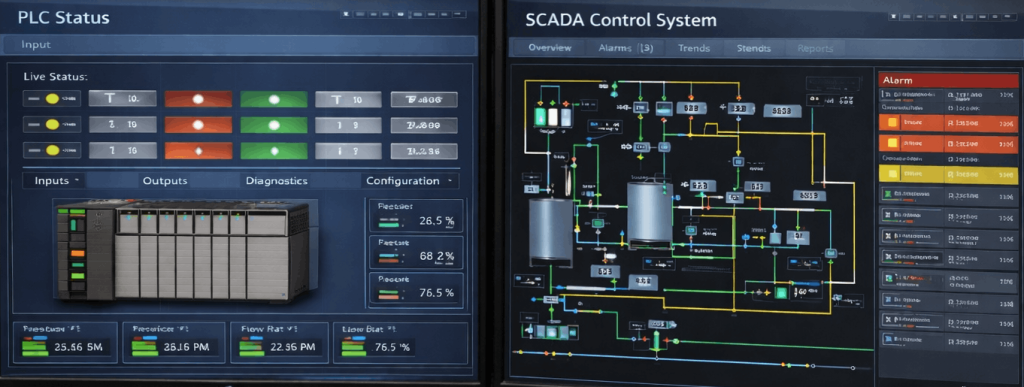
This stage breathes life into the digital factory by connecting online shop-floor data to the virtual model. It creates a living model that reflects what’s actually happening on the floor.
Key Characteristics
Real-time shop-floor systems integration
Real-time status view of machine, production metrics, and KPIs.
Detailed analysis of the insights, mapped onto layouts/machines.
Operational performance monitoring and analysis.
Value-Added Capability
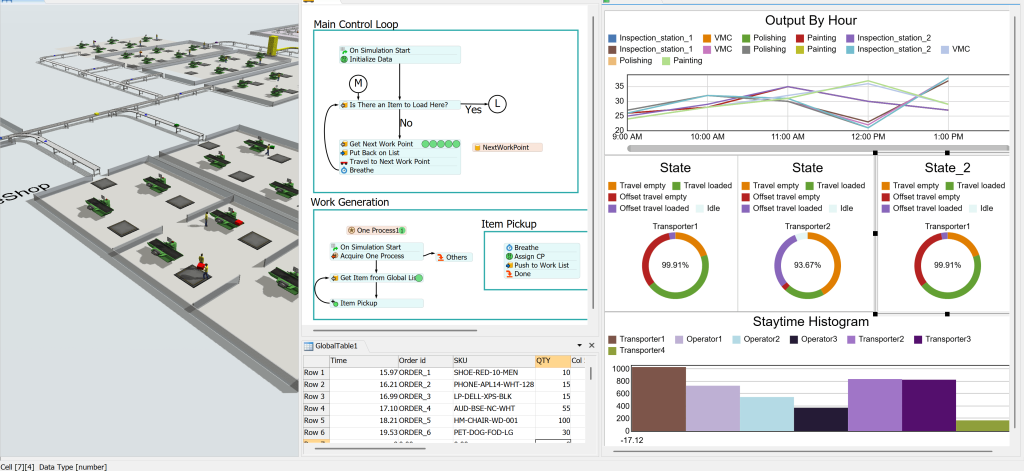
Visualization, Dashboards & 3D Digital Factory
This leads us to a 3-D digital double of the factory. It merges geometry, simulation context, and real-time operational data into one visual experience.
3D visualization with a rich interactive experience of the factory and assets.
Real-time dashboards mapped to machines and production areas.
Role-based views for executives, engineers, and the operations teams.
Single visualization tool for design, simulation, and live data.
Faster insight-driven decision-making and stakeholder alignment.
Why CCTech for Digital Factory
Future-Ready and Scalable Digital Foundation
A unified digital thread from layout to operations ensures continuity, scalability, and long-term value.
Reduced Risk and Rework
Initial validation of design, BIM coordination, and simulation decreases downstream modifications and execution risk.
Faster Planning and Iteration Cycles
Digital processes and data management also help align and decide as a team.
Improved Productivity and Performance
Use model-based learning to maximize throughput, capacity, and resource utilization prior to (and while) the factory is in operation.
End-to-End Operational Visibility
Connected digital factory models provide live visibility into machine states, KPIs, and production performance.
From Layout to a Living Digital Factory
Whether you are starting with factory layouts or aiming to build a connected, real-time digital factory, CCTech helps you progress stage-by-stage with clarity, control, and confidence.