

Transform engineering standards into structured, governed, and AI-ready intelligence that enables consistent validation, automation, compliance, and scalable decision-making across AEC workflows.
Speak to Our ExpertAEC organizations have multiple engineering standards, codes, and internal languages, scattered across different PDFs, manuals, and spreadsheets. To fill this gap, CCTech has developed a platform for structured, governed, and executable intelligence platform.
These documents are detailed and define how engineering should be done. However, they are not directly usable by systems. As a result, teams depend on individual expertise, leading to inconsistent standards and delays in reviews.
CCTech solves this challenge by building an Engineering Standards Intelligence Platform that converts engineering standards into structured digital rules. These rules can be centrally managed and reused across design automation, compliance checks, analytics workflows, and decision-making systems. The platform is designed to manage engineering standards using MCP-ready access layers so that systems, automation tools, and AI agents can retrieve, interpret, and apply rules consistently.

Engineering standards are defined in unstructured formats such as PDFs, documents, and spreadsheets

For detailed interpretation and review, engineers need to rely on senior engineers

Standards are applied inconsistently across projects, teams, and vendors

Process validation, approval, and review cycles are carried out manually and are time-consuming

A centralized system, required to manage, update, and govern engineering knowledge, is absent.

The best practises are difficult to scale across large programs, geographies, and business units
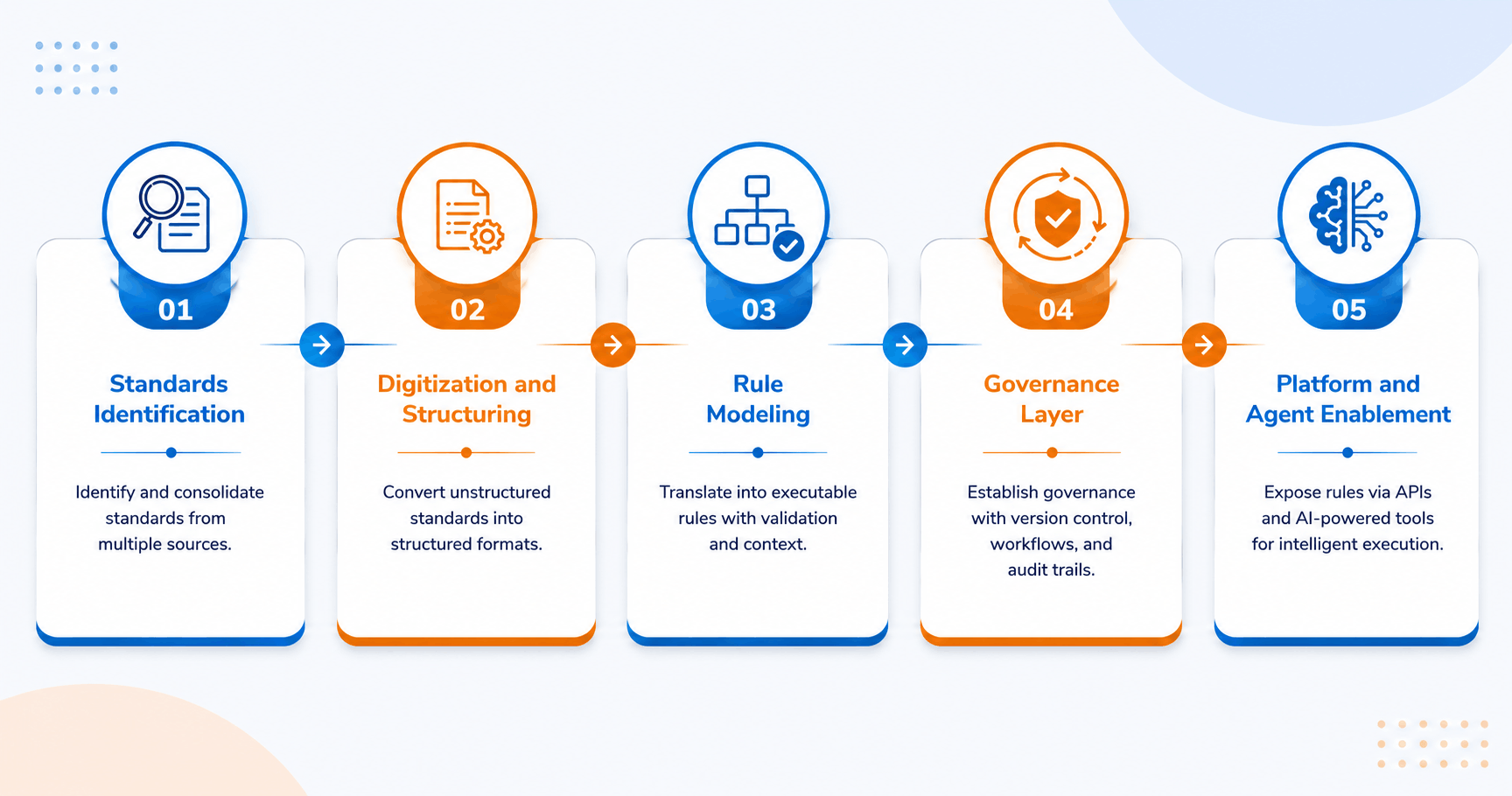
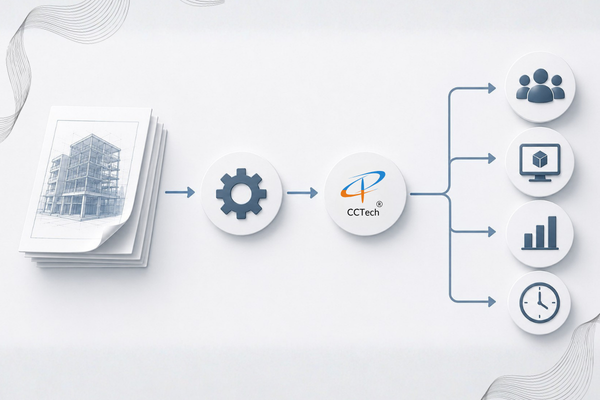
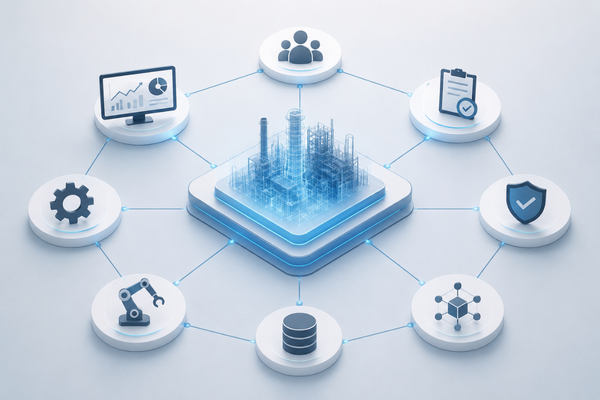
An enterprise engineering organization was able to digitize internal design standards and translate them into structured rule sets with the help of CCTech. These rule sets were then incorporated into compliance validation and design automation processes, enabling teams to adhere to the standards more seamlessly. It limits the manual interpretation.
This resulted in an organization with a lower manual review workload, greater uniformity across projects, shorter design and approval timelines, and provided a standards foundation that can be reused for future automation and AI projects.
It takes 6-12 weeks for implementations. It depends on the number of standards, the complexity of rule logic, and the level of governance required.
The factors that determine the cost are the number of standards to be digitized, the complexity of rule modeling, governance requirements, and the scope of integration.
Yes. The platform can integrate with BIM tools, Autodesk Forma, compliance checkers, automation systems, analytics platforms, and other enterprise applications.
Yes. The centralized systems help in reusing the standards across projects, scale across business units, and extend into enterprise-wide workflows.
Yes. CCTech can support ongoing updates to standards, governance, and library enhancements.
The platform can digitize engineering codes, internal guidelines, client standards, regulatory frameworks, specification documents, and organization-specific best practices.
Yes. AI is used to accelerate the extraction, classification, and structuring of standards. It is later validated by domain experts.
MCP provides a structured access mechanism that allows systems and AI agents to retrieve and apply engineering rules consistently.
AI agents can query rule sets, interpret relevant logic, and support dynamic validation, decision support, and workflow execution.
No. The platform does not replace engineering expertise. It standardizes and operationalizes knowledge for faster and more effective work.
Connect with CCTech to digitize, govern, and operationalize your engineering standards to-

© 2006 – 2026 Copyright, Centre for Computational Technologies Pvt. Ltd. All rights reserved.